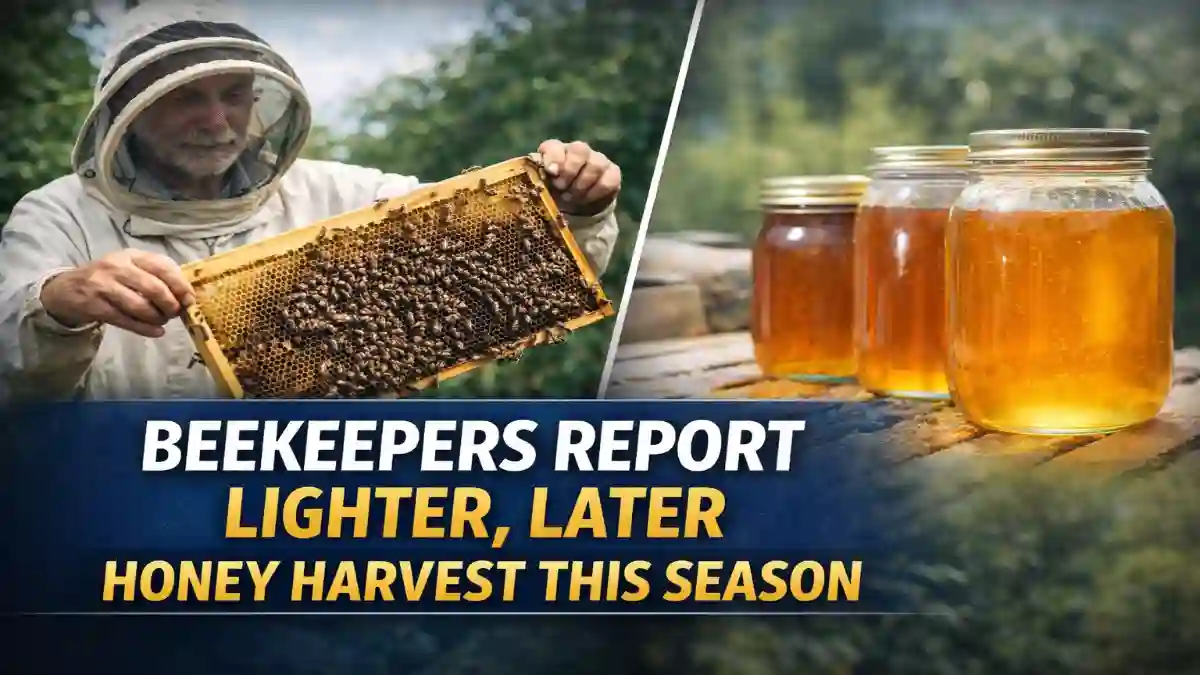
Beekeepers across several regions are reporting that this year’s honey harvest is arriving later than usual, and in many cases, yields are lighter than expected.
Weather variability, bloom timing, and shifting environmental conditions are being closely watched as producers try to understand what the season may ultimately bring.
For operations that rely on predictable cycles, even small changes in timing can affect planning, staffing, and supply expectations.
What beekeepers are seeing in the field
Many producers say colonies built up more slowly during the early part of the season. Cooler stretches in some areas and irregular rainfall in others influenced when flowers became available for foraging.
When nectar flows start late, honey accumulation inside the hive may also be delayed.

Some beekeepers note that while bees appear healthy, the surplus needed for harvesting has taken longer to develop.
Why timing matters
Honey production depends heavily on coordination between bee activity and plant life cycles.
If blooms peak earlier or later than usual, colonies may miss ideal collection windows. Extended gaps between flowering periods can also reduce total output.
Because of this, even a small shift in temperature patterns can ripple through the entire season.

Regional differences remain
Not every location is experiencing the same outcome.
In certain areas, conditions have supported steady nectar flows, allowing beekeepers to maintain average harvest expectations. In others, variability has made planning more difficult.
These contrasts are common in agriculture, where local weather plays a major role.
Economic impact
Lower yields can influence wholesale supply, contract fulfillment, and retail pricing later in the year.

However, market specialists caution that it is often too early to predict final availability. Late-season blooms or improved conditions may still change totals.
Producers typically reassess projections several times before the year concludes.
How beekeepers adapt
Experienced operators often respond by adjusting hive placement, monitoring colony strength more frequently, and delaying extraction schedules.
Flexibility can help them make the most of opportunities if nectar flows improve.

What consumers might notice
For shoppers, changes in harvest timing are not always immediately visible.
Inventories from previous seasons, blended sourcing, and distribution networks can help smooth short-term fluctuations.
Still, industry participants keep a close eye on production trends as the season develops.
A broader environmental conversation
Honey production is frequently viewed as an indicator of wider ecological patterns. Pollinator health, habitat conditions, and agricultural practices all contribute to how colonies perform.

Because bees interact with large landscapes, their activity can reflect changes happening beyond individual farms.
Waiting for the final picture
Most beekeepers emphasize that the season is not finished. Later blooms, favorable temperatures, or improved moisture levels could still support additional honey flows.
Until extraction is complete, many prefer to describe the year as developing rather than decided.
The bottom line
Reports of a lighter and later honey harvest are prompting careful monitoring across the beekeeping community.
While uncertainty remains, producers continue to adapt to conditions and evaluate how the rest of the season unfolds.
Observers, buyers, and consumers alike will be watching to see whether late improvements can offset early delays.