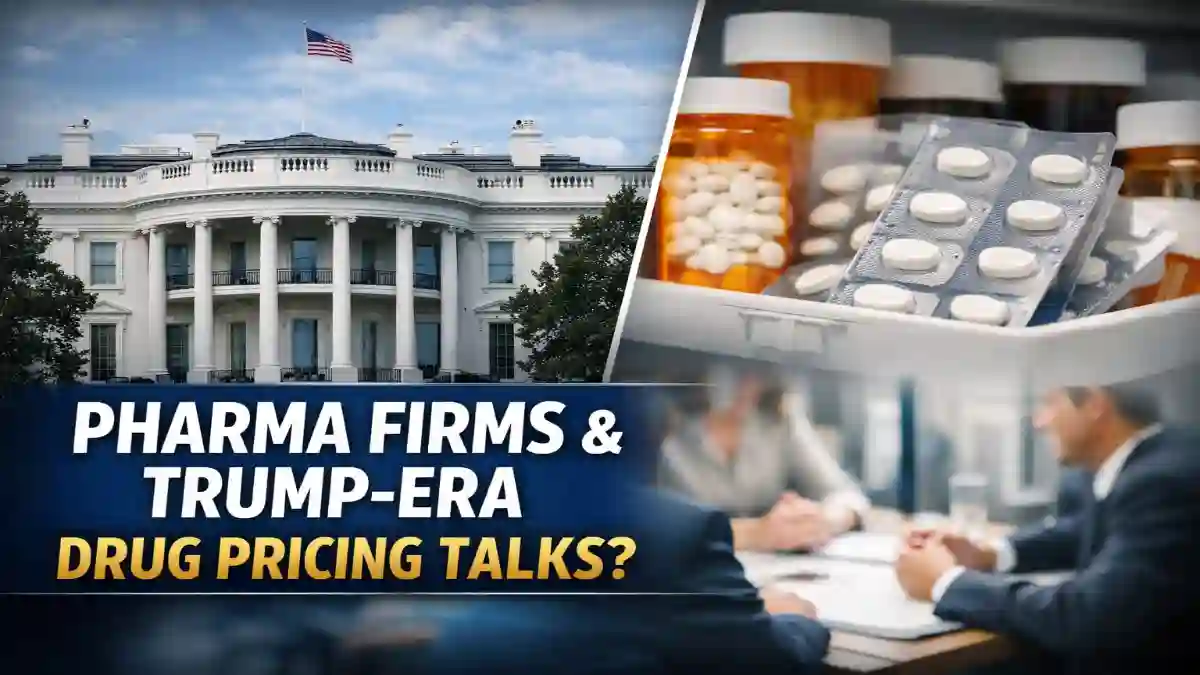
Several pharmaceutical companies are examining whether there may be opportunities to participate in drug-pricing conversations connected to policy approaches discussed during the administration of Donald Trump.
While earlier agreements and proposals focused on specific manufacturers and medicines, interest appears to be widening among firms that were not initially part of those frameworks.
Industry observers say companies are now assessing how future negotiations or revived structures could affect pricing strategies, market access, and public perception.
Why companies are paying attention now
Drug pricing remains one of the most visible issues in American healthcare. Pressure from patients, policymakers, and advocacy groups has kept the topic in regular discussion.
Even when formal agreements pause, the broader policy direction can still influence how manufacturers plan discounts, contracts, and long-term investment decisions.

For companies that were not included in earlier rounds, understanding how participation might work has become increasingly important.
What participation could involve
Health policy specialists note that involvement in pricing discussions can take different forms.
Some arrangements may focus on voluntary commitments. Others may involve structured negotiations tied to public programs, supply guarantees, or transparency expectations.
Each path carries trade-offs between flexibility, reputation, and revenue planning.

A changing competitive landscape
When some manufacturers enter agreements and others remain outside them, differences can emerge in how products are perceived by buyers and the public.
Companies that are not participating may face questions about affordability or alignment with policy priorities.
As a result, firms are carefully evaluating whether seeking inclusion could provide long-term strategic advantages.
Uncertainty remains
At the same time, there is no single open door or guaranteed route into any negotiation model.

Future developments depend on political decisions, administrative priorities, and how regulators choose to structure talks.
Because of this, many companies are preparing internally while waiting for clearer signals.
What analysts are watching
Market analysts say three factors may shape what happens next:
- whether policymakers revisit earlier frameworks
- how drug affordability debates evolve
- the response from patients and healthcare providers
These elements together may determine how attractive participation becomes.

Impact on patients
For patients, expanded participation could potentially mean broader access to pricing programs or discounts, depending on how any arrangements are designed.
However, experts caution that outcomes vary widely and depend on implementation details.
Business considerations
Manufacturers must balance public expectations with research costs, supply chains, and investor requirements.
Entering a pricing framework may improve perception but can also require operational adjustments.

The broader policy picture
Drug pricing discussions rarely stay fixed. They tend to move with election cycles, economic pressures, and healthcare priorities.
That is why many firms are maintaining flexible strategies rather than making immediate commitments.
The bottom line
Interest in joining drug-pricing conversations appears to be growing among companies that were previously outside earlier efforts.
Whether those pathways become formal opportunities will depend on how future policy direction develops.
For now, manufacturers, investors, and patients alike are watching closely for signs of how negotiations may evolve.